What is depicted
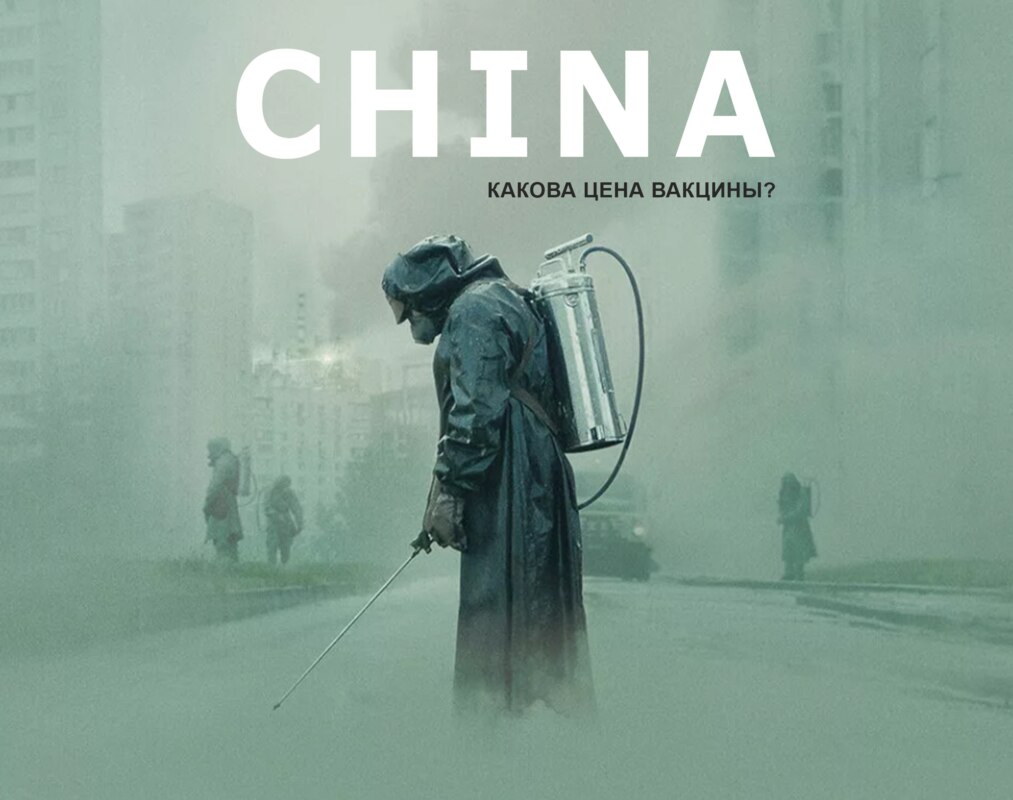
A gray-green image in thick haze. In the foreground is a figure in a dark rubberized raincoat and a protective mask, with a silver tank on its back and a sprayer in hand. Behind it, two more figures are visible at the edges of the fog, along with high-rise buildings. At the top, in large letters, is “CHINA,” and just below it, “WHAT IS THE PRICE OF THE VACCINE?”
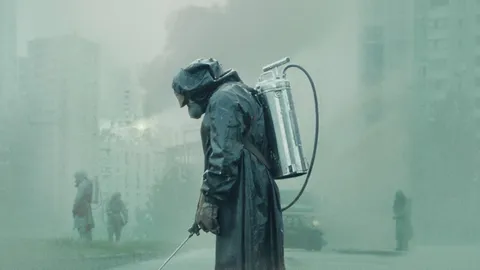
The base is taken from the promotional art for the HBO miniseries “Chernobyl” (2019). Who assembled the montage and when it was first posted is unknown.
Why Chernobyl
The series aired in May 2019 and was discussed very widely, so in spring 2020 its imagery surfaced on its own. The series’ promotional slogan was built around a question about the price of a lie, and the caption on the meme rephrases it: instead of “lie” it says “vaccine.”
Another basis for the comparison is questions about the transparency of information. In February 2020, Russian-language media and blogs discussed whether the epidemic would become a “Chernobyl” for China, that is, an event that would expose the flaws of the system. The meme reduces this discussion to a single frame.
Context of early 2020
The first cases of unknown pneumonia in Wuhan were reported at the end of 2019. The disease was named COVID-19 only in February 2020, and on March 11 the World Health Organization declared a pandemic. Before that, on the Russian-language internet the virus was simply called the “Chinese coronavirus” — and that is the name of the meme too.
There was no vaccine at the time, and the question of its price sounded like a grim joke: first it had to exist at all. The meme catches this mood, a mix of fear, anticipation and the habit of laughing at what you cannot control.
A caveat about the wording
Today it is customary to say “COVID-19” or “coronavirus” rather than tying the disease to a country: the WHO recommends not using geographic names in disease names so as not to reinforce stigma. The name “Chinese coronavirus” belongs to the meme itself and describes its era.
Such a picture should be used carefully: a joke about the information system must not become a joke about the residents of a particular country.
Caption examples
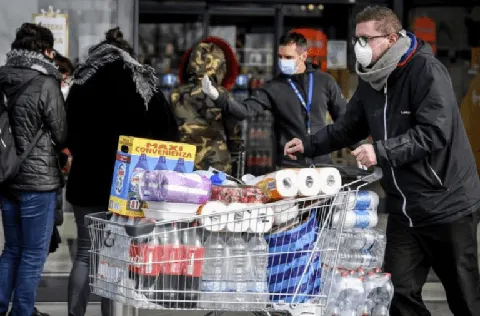
“My neighbor is stockpiling buckwheat” above the frame: a caption about panic before quarantine. The figure in the protective suit adds scale: an everyday purchase looks like preparation for the end of the world.
“When they said to work from home, and the home internet only reaches the window” — irony about the home-office format.
“Heading out for bread” is the shortest variant. The contrast between a trip to the store and the hero’s gear creates the comedy.
“Weekly forecast: fog” — the caption returns the frame to what is actually visible in it: gray haze and a lone figure.
The montage works best in captions about everyday anxiety rather than about people and countries, for example about food supplies or quarantine plans. Then the image of thick haze and the protective suit plays the role of hyperbole, not a report of a real event.
A good example picks a specific trifle and gives it the scale of an incident. The smaller the occasion and the more serious the hero’s gear, the clearer it is that this is a joke about how we exaggerate our fears.