What the picture looks like
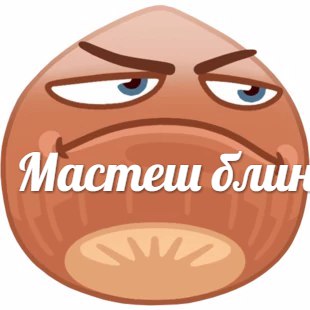
The image shows a round character of brown hue with a bulging forehead, furrowed brows and blue eyes. The mouth is turned down, and the lower part of the face is lighter, as if light were reflecting off it. The character resembles a messenger sticker or clip art in a soft, volumetric style. Across the face, in white italics with a black outline, runs the caption “Mastesh, dang it,” spanning almost the full width of the image, so the text and the facial expression work together: the character looks irritated, and the word “dang” adds vexation. The overall tone is grumpy but good-natured. This presentation suits both self-deprecating jokes and remarks aimed at a friend.
Distortion of a name
“Mastesh” is thought to come from the name of the company Mastech, which makes measuring instruments. The phonetic resemblance is obvious, and the move from a company name to an everyday word follows a device common in internet speech: a brand name is distorted into a sound resembling an ordinary word. A link to this specific company is not confirmed by documents. The mere fact that such a firm exists and works with measuring equipment does not prove that the meme arose from its name. The explanation should therefore be treated as a version.
The meaning of “Master” and VKontakte speech
The second line of meaning is tied to VKontakte. The record notes that the word is used in the sense of “master,” that is, a person who does a job well or takes on a difficult task. In a playful form, “mastesh” sounds like praise with irony: the speaker acknowledges a skill while also teasing it. Example caption under the picture: “Mastesh, dang it, you fixed everything again.” This shows how one word can express both annoyance and approval, depending on intonation.
Why the format works
The sticker is short, reads in a second, and needs no context. A character with a scowling face suits situations where the result is poor but the person is trying, and the text sets the tone right away. The phrase “Mastesh, dang it” is easy to say and repeat, which matters for words that live on in messaging. Formats with a speaking caption on a recognizable character often outlive their original occasion: people use them without remembering where the word came from. It is also worth noting that the picture is not tied to any particular company: most people who use the word do not link it to a maker of instruments, and a noticeable gap opens up between the original meaning and everyday use.
Dating and verification
The “2017” tag indicates the year the entry relates to, but the record gives no date of first publication, no name of the picture's author, and no link to the original post. So the exact moment the meme appeared, and who first connected the firm with the colloquial word, remain unestablished. Clarifying this would require archived copies of the messages and discussions where the word first came into wide use. Comparing with other pictures in the series would show whether the text or font changed over time, but the record contains no such material.