The wave after the finale of Infinity War
Images with a crumbling figure had appeared in memes as early as 2017: the effect was applied to individual photos and familiar characters. However, the mass wave in spring 2018 got a concrete plot anchor in Avengers: Infinity War. Thanos gathers the Infinity Stones and with the gauntlet destroys half of all living beings. The disappearance is shown as bodies turning into crumbling particles. Among the affected heroes is Peter Parker, Spider-Man, who speaks to Tony Stark before vanishing.
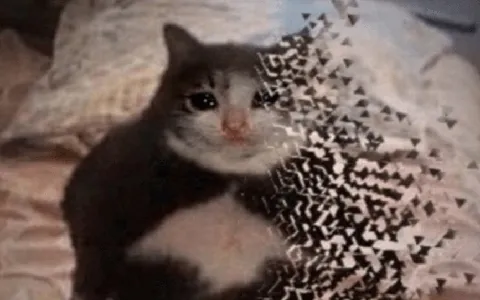
The short line about feeling unwell began to accompany remixes with entirely different characters. In late April 2018 versions featuring SpongeBob and characters from existing memes were already spreading on Facebook. A recognizable image was kept recognizable, then one part of it was destroyed. Thus a cinematic effect became an independent language for jokes about money, confidence, strength, or hopes disappearing. The film gave the popular wave a shared storyline, but it was not the first appearance of the graphic device itself.
Repin inside a fantastical edit
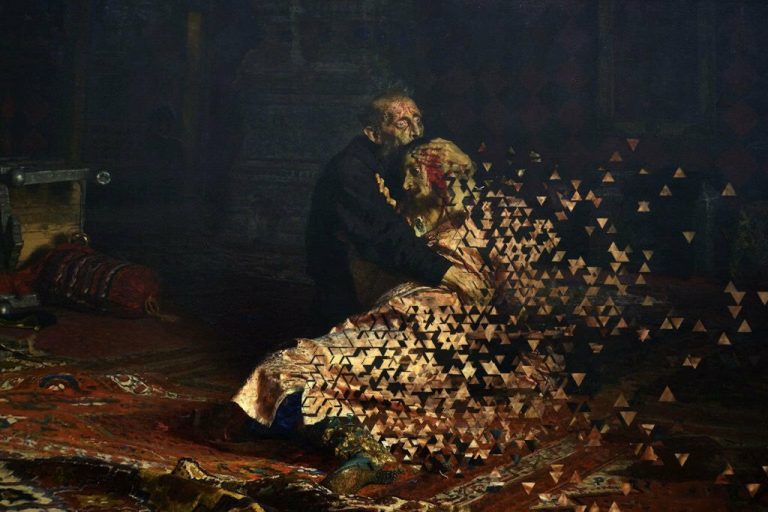
The basis of the image is Ilya Repin's painting Ivan the Terrible and His Son Ivan on November 16, 1581, painted in 1885. The tsar in dark clothing embraces the tsarevich against the background of a gloomy room and a carpet. In the treatment, the younger figure's body breaks into triangular fragments that drift to the right; the effect also captures the lower part of the image. There is no Spider-Man, no Tony Stark, and no Thanos here. The meme author transferred the method of disappearance onto another work. The author of this specific edit and the date of its first publication are unknown.
The painting's long title contains the date of the depicted historical event, not the year the painting was created. For this joke, the recognizable composition matters more: one hero tries to hold on to another, but the treatment makes this visually impossible. The cinematic reference intervenes in the tension between loss and the attempt to hold on that already exists. The triangles are added digitally; they are not part of Repin's painterly intent and do not depict the condition of the real museum canvas.
Noticing the disappearance at the edge
The meme has a characteristic intermediate state: the figure is still recognizable, but its outline has already come apart. If you remove the object entirely, you get just an empty space. The particles preserve the moment of loss and let you show what exactly is disappearing. In this variant the embrace connects the whole and the broken figures, so the viewer simultaneously sees the loss and the reaction of the remaining hero. The direction of the scattering leads the eye from the center of the painting toward the emptying right edge.
The caption about feeling unwell sounds deliberately modest against the backdrop of complete disappearance. Such a gap in scale suits self-irony: a person describes a major disappointment as a minor malaise. Another way of using it dispenses with the line altogether: the vanishing object is given a name, and the remaining hero becomes the one who hoped to keep it. Then the main meaning is conveyed by the action rather than the text, and the format easily transfers to plans, saved files, or supplies.
What might crumble in invented examples
In an invented student scene, the vanishing tsarevich stands for 'my weekend', and the tsar holding on to him stands for 'me after the announcement of an extra exam'. The embrace conveys reluctance to part with rest. In another invented variant, 'the last saved version of the drawing' crumbles, and the whole figure becomes 'the artist after a disk crash'. Here the visibility of a still recognizable object is especially fitting: the person remembers the work but can no longer get it back.
A third invented example shows a 'budget for a new bicycle' vanishing after buying a whole set of repair tools for an old one. The remaining character is 'me, who decided to save money'. The joke concerns a miscalculation and disappointment, not an event in the painting's historical plot. In all three cases the caption names the concrete value the hero tried to hold on to; this lets the disintegration effect serve as the payoff of a small story.