What's in the picture
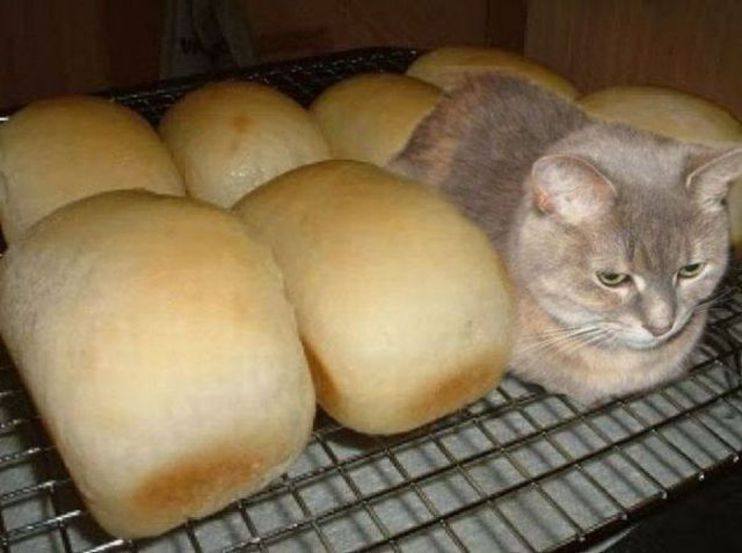
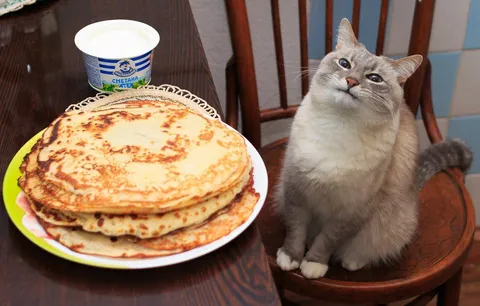
In the photo, a gray cat is lying on a metal cooling rack for baked goods. Around it are several large, golden-brown loaves, and the cat itself looks toward the camera with an expression many users read as displeased or sly. The shot looks accidental, and it is precisely this unintentional quality that makes it funny to viewers used to seeing cats in the most unexpected places.
Shots like this are a typical example of a "lolcat": a photo of an animal in an everyday situation where the creature looks both cozy and comical. The contrast between the cat's serious gaze and the simple kitchen setting made the image a convenient basis for captions. The photo is easy to crop and move between platforms while preserving its main detail — the expression on the cat's face.
Where the phrase came from
The phrase is built as a parody of the grammatically correct "Don't eat it, think it over" — addressed to someone advised not to eat and to think first. The deliberate error and the childlike, broken grammar create the effect of childish or illiterate speech, and this is precisely the main device of an errative. The reader instantly recognizes the original phrase, and the mistake signals that this is a joke, not a serious warning.
The exact date the caption appeared and its author are unknown, so the time of origin can only be discussed tentatively. The meme dates to 2016, which is consistent with the general surge of lolcats and erratives in Russian-language communities at that time. Captions of this kind usually arose in a single discussion thread and then spread further without an attributed author.
How the meme spread
Erratives were popular in the 2010s on forums, in social media groups, in comments, and on image boards. A short phrase paired with a picture was easy to reproduce: all it took was changing the caption while keeping the cat photo to get a new joke. Users saved the image, added their own text, and republished it, so the same cat appeared in a wide variety of contexts.
Users applied "Don' eat, thinka" to situations where someone needed to be warned about the harm of acting rashly, especially where food was involved. The joke worked on the contrast between the serious tone of the warning and the cartoonishly illiterate spelling. The meme was sometimes also used as a response to someone else's bad idea, adding the same caption to it.
Meaning and use
The meme is mainly used as an ironic warning: the other person is advised to stop before eating something questionable or doing something obviously foolish. The cat in the photo silently reinforces the caption, looking as if it has already made up its own mind. This image works especially well in messaging, where text alone, without the picture, would seem less expressive.
It's worth noting that the meme is not aimed against anyone: it doesn't mock real people and doesn't use anyone's personal data. It's a typical harmless joke for the genre, built on wordplay and imagery. The recipient usually takes such a caption as friendly teasing rather than a reproach.
Significance within the culture of erratives
"Don' eat, thinka" belongs among the memes where a deliberate spelling mistake serves as a comic device. Such phrases show how internet language turns an error into a mark of belonging to a particular community and into a tool of self-irony. A user who gets the joke is, in a sense, demonstrating their inclusion in the context, while someone who doesn't get it simply sees an amusing typo in the caption.
The combination of a recognizable shot with deliberately distorted text remains one of the basic devices of Russian-language macros, even as specific captions fall out of use over time. That's why memes like this are still remembered as an example of early internet humor.