From a drawing to a loud incantation
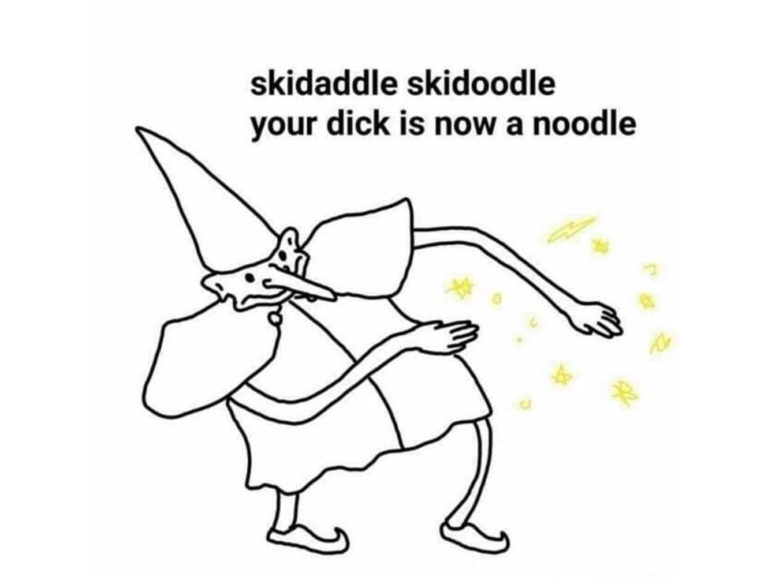
The picture of an outlined wizard spread on English-language social networks in the fall of 2017. Surviving traces lead to September posts on Instagram and Facebook, but the artist’s name does not follow from them. The caption combined deliberately invented magic words with a crude rhyme: the caster told the addressee that an intimate part of the body would turn into noodles. The low style of the punchline immediately separated the picture from serious fantasy.
The next stage is connected with voice-over. On October 2, 2017, a video in which the picture’s text is read aloud appeared on the Bobokins12 channel. In November another version, published by the channel your mom a hoe, added a musical theme from NFL broadcasts with deliberately distorted sound after the line. This combination became material for new edits. In January 2018 PewDiePie discussed the format, which shows that the joke had already spread beyond small individual accounts.
A wizard without solemnity
The drawing shows a wizard with a large nose, a long beard and a tall pointed hat. His body is sketched with a few black lines on a white background. Both arms are stretched out to the right, as if he has just finished an expressive gesture. Small yellow stars are scattered near his hands. Above the character is an English inscription in two lines: first the rhyming magic words, then the promised result.
This version does not depict the transformation itself and does not show a victim. The whole scene ends on the wizard’s gesture, so the consequence exists only in the language. The stars support the familiar idea of a magical effect, but the disproportionate figure and the simplicity of the lines make it comically cheap. The picture resembles an overly confident answer from a person who has mastered one spell and immediately decided to apply it to any problem.
Rhyme instead of power
The mechanism is built on a thwarted expectation. The title sounds like a formula that ought to be pronounced solemnly, but the ending offers an extremely everyday and obscene result. The rhyme makes the silly phrase smooth and memorable: it seems that the rhyme itself gives the wizard the right to declare the impossible accomplished. Verbal absurdity matters here more than any considered system of magic, the character’s personality or an explanation of how his world works.
In the video another blow to expectation appears. The line ends, and instead of a striking fantastical scene an overloaded musical insert kicks in. The editing exaggerates the spell’s power through sound, although the result remains funny. That is why the wizard is convenient to place in episodes with serious preparation for a miracle: the viewer recognizes the magical pose, expects a majestic finale and gets a simple rhyme along with an excessively loud reward for it.
Three everyday transformations
For your own gentle variant you can come up with: “Shurum-burum — the deadline is already by morning.” The wizard announces a new submission time as if an arbitrary decision by the boss had supernatural force. The humor comes from the familiar helplessness before changed conditions, and the rhymed form makes bad news unexpectedly festive.
Second example: “Hocus-pocus — the vacation turned into a call.” Here what disappears is not a person but planned free time. A third plot does without replacing the spell: “Me, who pressed a random button and fixed the printer.” The wizard’s gesture grants the hero power, although the successful result was obtained without understanding the cause. In this reading the picture laughs at a self-assured display of skill that hides plain chance and the desire to look like an expert.