What the picture shows
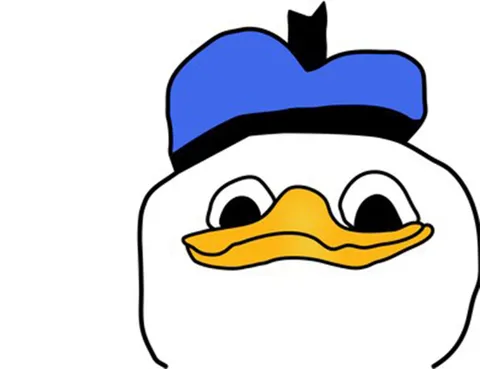
The frame is a close-up of a penguin against a light blue background resembling the sky. The eyes are wide open, the irises are blue, and the gaze is directed at the camera. The beak is orange and open; inside it is dark. The top edge of the frame cuts off the top of a head with dark plumage, and the face fills almost the entire image.
The image is small in resolution and soft, as if taken from a screen. There is no text on it. The expression is read instantly, without background details, and this is the main strength of the frame for captions.
The character and the cartoons
The penguin belongs to a team of four penguins who first appeared in the background of the DreamWorks film Madagascar (2005). Later they received their own series and the feature film “Penguins of Madagascar” (2014). Judging by the appearance and the color of the eyes, the picture shows Private, the youngest member of the team, although this cannot be asserted with confidence from a single frame.
The exact scene the frame is taken from is not known. For the template this does not matter: the emotion reads without context.
How the template emerged
There is no reliably established date for the frame's first appearance as a meme, and the author of the first caption is also unknown. Accounts of early posts on foreign platforms differ, so it is not possible to confidently name a day or a community.
It is known that captions about bewilderment and incomprehension were built on this reaction: a person hears something so strange that they cannot find words. In the Russian internet the template took hold together with a strong phrase given in the title; it is not reproduced here.
What this reaction means
The meaning of the reaction is stunned disbelief. When a person sees someone's audacity or hears an absurd request, they freeze. The penguin conveys this pause: wide eyes, an open beak and a complete absence of words.
The mechanism works on the pause. The caption sets up the situation, and the face shows the delayed reaction. The shorter the caption, the stronger the effect: the viewer completes for themselves what was actually said. This device is best aimed at arrogance and absurdity, not at people.
Caption examples
Example 1: “My neighbor decided the parking space is his now, because he got out of his car first.” The caption describes the situation, and the penguin shows what the reaction to such a claim looks like.
Example 2: “A colleague suggested a call on Saturday at eight in the morning, because it's more convenient for everyone.” A phrase of false concern, and the character's reaction says that it is convenient for only one person.
Example 3: “A friend asked to borrow money and promised to pay it back in another life.” The absurdity of the promise works better than any explanation.
Example 4: “The cashier asked why I don't know how much my own order costs.” The tension comes from the absurd question, and the frozen reaction closes the joke.
All the captions are built the same way: first a short description of the brazen situation, then the face as the punchline. The penguin explains nothing, so the caption stays short.
How to use the frame
The frame works best as a response to a situation, not to a person. It should not be used to mock the appearance, names or personal circumstances of real people: the template is meant for a reaction to actions.
One or two lines are usually enough for the effect. If the caption is longer, the viewer gets tired of the text before they notice the facial expression.