Two episodes meet on Twitter
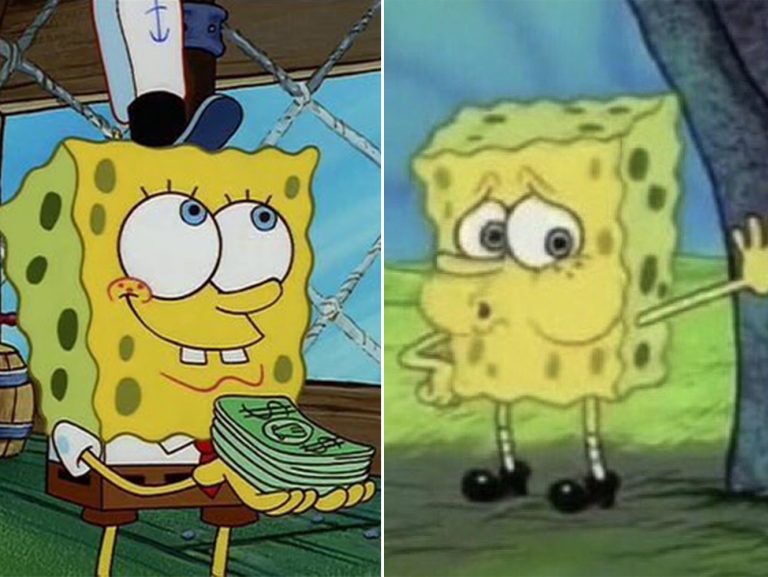
The collage is assembled from different scenes of the first season of SpongeBob SquarePants from 1999. The frame with the stack of money is linked to the episode “Squeaky Boots.” The tired character on the right is taken from “Nature Pants”; separately, this image spread under the name Tired SpongeBob. So what we see is not a sequential story of the character spending all his money. The combination of frames and new captions creates exactly that shift.
The well-known early version of the pair was posted by Twitter user @_randall on March 30, 2018. He compared spending on food and fuel. In early April, other popular versions appeared, including ones about spending on a loved one and on oneself. The format grew out of the already widespread tired SpongeBob: to the reaction to effort, people added the opposite state and got a short conversation about why an identical price evokes completely different feelings.
Money on the left, fatigue on the right
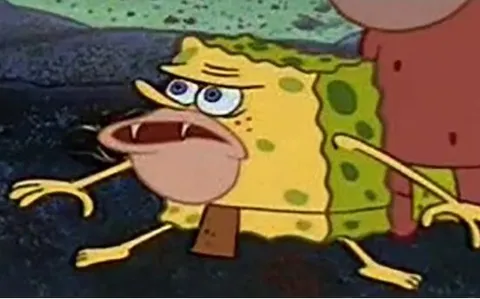
On the left, SpongeBob stands in work clothes and a white cap with an anchor, holding a green stack of bills and smiling broadly. The background shows wooden elements and a mesh, familiar from the restaurant. On the right, the image quality is noticeably softer: the character is without his usual shirt and square pants, wears black shoes, has his hands spread apart and a weary expression. Both pictures sit side by side without explanatory captions about specific purchases.
The absence of his usual clothing heightens the sense of depleted resources, although no money is shown on the right half at all. The pale coloring and posture add to the difference in energy. The viewer sees not an accounting report but two states of one character. In a finished joke, it is enough to name the occasion for the bills to mean eager spending and the exhausted figure to mean painful parting with the same sum.
Cost changes in the buyer's head
The most characteristic version compares equal expenses. A purchase one has long wanted feels cheap; a mandatory payment of the same amount suddenly seems ruinous. The meme makes this inconsistency visible without requiring the viewer to work out the real balance in the account. The state on the right may appear even in a person who is fully able to afford both things: what is unpleasant is the very reason one has to hand over the money.
Another variant uses sequence in time: getting a paycheck and the end of the month, the start of a trip and returning home. Then the two halves turn into a short “before — after.” The caption helps distinguish a comparison of tastes from a story about budget depletion. If the sums are equal and different items are named, the emphasis falls on preferences; if a period is indicated, the viewer reads a change in the character's situation. The picture itself allows both readings and does not fix a single meaning.
Where the bills willingly go
In a fictional version, the left reads “buy a beautiful set of dice,” and the right reads “pay for delivery of this same set.” The main item seems a well-earned reward, while the added cost evokes the image of total exhaustion. The joke does not depend on how large the delivery fee actually is: what matters is the unexpected difference in willingness to pay.
A second fictional scene compares buying an unusual kettle with replacing a burnt-out light bulb in the hallway. The person joyfully spends money on a new item they will brag about, but experiences the necessary trifle as a blow to the budget. A third variant shows the beginning and end of a visit to a book fair: on the left the hero carries the planned sum, and on the right he is already calculating whether he can carry the books he bought. Here the collage tells of a gradual loss of financial restraint while preserving the joy of the purchases themselves.