The scene and the sound
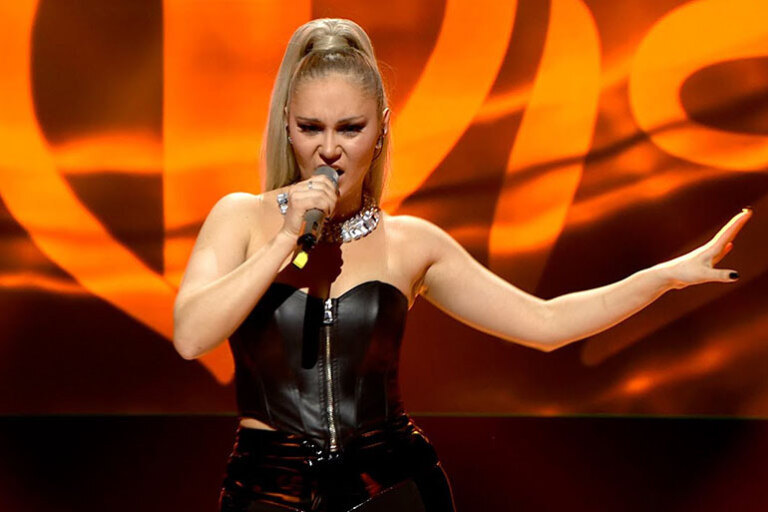
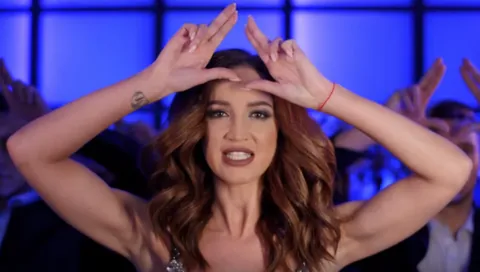
The image shows a performer with a microphone against bright orange screens. In short videos, this visual is paired with an audio clip from the song "Do Svidaniya," in which the phrase "Thanks, but no" can be heard. What matters isn't just the verbal formula of refusal but also the musical delivery: the viewer gets a clear point of closure. A single frame can't establish which specific concert it was taken from; the photo carries no date or caption identifying the event.
A song becomes a reply
"Do Svidaniya" is a song by the Romanian singer Aris; the clip spread through short videos as a ready-made audio reply. The meme version often pulls a few words out of the track and turns them from a song lyric into a character's line. In the original music, the words belong to an artistic performance, while in meme edits they get applied to all sorts of offers. So you shouldn't attribute every caption users lay over the sound to the singer herself.
Politeness and finality
The phrase combines gratitude with an unambiguous refusal. "Thanks" acknowledges the other person's gesture, and "but no" closes the matter. The music makes the refusal not aggressive but strikingly final — as if the decision has been made and there's no need to discuss it further. It's exactly this versatility that lets the sound travel between topics: an uninteresting purchase, an unnecessary meeting, an extra task, or yet another episode of a show can all become the target of the reaction. The joke usually works through the mismatch between the grand musical full stop and the trivial offer.
Ideas for your own videos
For example, a message appears on screen — "Maybe take on one more task before the weekend?" — then the clip plays, and the author closes their laptop. Or "One more episode?", followed by a shot of someone choosing sleep after all. In a friendly chat, you can use the phrase to gently decline a third dessert, even though visually the decision is staged very dramatically. These are new everyday scenarios set to the music of "Do Svidaniya," not quotes from Aris: the singer never said anything about work tasks or TV shows.
Respectful refusal and boundaries
In real communication, playing with the formula shouldn't obscure a person's boundaries: a refusal shouldn't be mocked or treated as an invitation to keep pressuring. The meme suits a voluntary, self-ironic response to harmless offers, but not casting doubt on anyone's consent. If the sound is used in a post about the singer herself, distinguish the musical clip from authorial commentary. The stage shot doesn't indicate to whom the performer is saying "no"; without a caption it's simply a performance. Don't present the joking edit as a real recording of a conflict or a refusal aimed at a specific person.
The musical line can be perceived as a light pop response even by those who don't know the rest of the song. Such a snippet helps convey a mood but doesn't tell the whole story of the song and shouldn't be used to draw conclusions about the author's intent. The meme usually trims the sound so the refusal lands on an edit point: a cut, a hand gesture, or the offer disappearing from the screen. A short edit reads more clearly when the problem is set up beforehand, and no long explanation is tacked on after the refusal.