Two comics side by side in April 2018
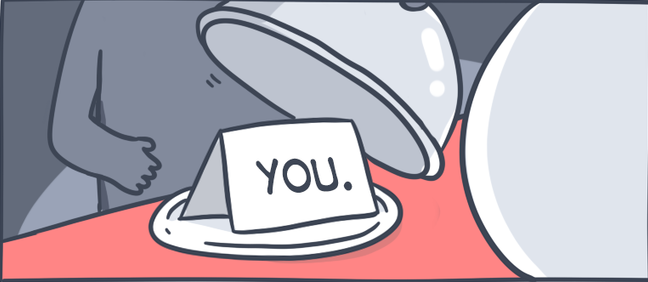
Two closely related but independent posts appeared in April 2018. On April 4, user ThoBayMau posted on Facebook a comic by Vietnamese artist Huỳnh Thái Ngọc. A week later, on April 11, the webcomic Rainbow Bunny posted its own three-panel scene: a rabbit asks for the cheapest dish, the waiter opens the plate, and there is a note reading “You”. It was this version that quickly reached Reddit on April 12 and became widely edited.
The short scene with YOU repeats a recognizable punchline, but the plate, the hand lifting the cover, and the single word do not point to any specific artist. These close publications show how a similar joke almost simultaneously received several visual versions.
Lifting the cover as a pause
The decisive moment is placed in the last panel. Before it, the reader hears the request and sees the service; then the lid turns the plate into a small scene of revelation. The answer “you” can be at once a jab and an unexpectedly tender acknowledgment — which is why an early reworking replaced “the cheapest thing” with “the best thing” and reversed the assessment, leaving the whole composition in place.
Even without the first two panels, the objects convey the progression of the scene: the dish is served, the cover is lifted, and a response appears on the plate. The word is addressed to the customer, not to the food. First the ritual of service promises a valuable order, then instead of a dish a short judgment about a person appears — and the punchline rests on this collision.
How roles and tone change
The first common reworking turned the original jab into support: the hero asks for the best thing available and receives the card “you.” Later people changed the text on the note, changed who places the order, or attributed the waiter to a familiar platform or group. This is not one fixed plot but a small role-playing machine: who asks, who evaluates, and what is declared the chosen thing.
The scene can be turned toward self-irony: “Asked for a discount for old friendship's sake — the waiter lifted the cover, and on the plate was a card ‘YOU’: the discount turned out to be the status of ‘friend’ itself.” Another tone is a compliment to a friend: “Ordered the most important thing at the party — the cover was lifted and the birthday boy was brought out.” In both cases the card remains an unexpected answer precisely to the order, not a random line in a restaurant.
The dish's price and a judgment of the person
“Ordered the most valuable thing in the kitchen — the cover was lifted, and on the plate was a card ‘SLEEP’: the most valuable thing turned out to be what I had been missing since morning.” Here, instead of food, an answer appears about what the person lacks, and the literal order turns into a substitution of meaning.
The English word “cheap” describes not only a low price: applied to a person, it can sound like a derogatory judgment. That is why the customer expects an answer about the cost of food, while the note unexpectedly turns the definition against him. In the kind reworking with “best,” this linguistic trap is preserved but its sign changes: the diner is declared the best rather than the cheapest. For both versions it matters that the word in the order can shift from a thing to a person; a random card on a plate creates no such link.