One phrase, many musical versions
In the spring of 2023, a sound clip of a child's voice saying "boors have no rights" began spreading in short videos. Later the phrase was picked up for remixes, dance clips, reactions, and parodies. There's no need to identify the child behind the voice in order to understand the trend, so personal information about the underage creator shouldn't be sought out or shared.
The popularity came not from a complex story but from the categorical formula and its musical suitability. Different beats were layered over the same recording, building different contexts — from a serious conversation about inequality to a comic dance by someone seemingly accepting the "rule." Reposts don't always preserve the original description, so the initial post should be referenced cautiously.
Irony between slogan and exaggeration
The word "muzhlan" ("boor") sounds dismissive and refers to a crude type of male behavior, but the short phrase makes a radical generalization. In one clip it can be part of a critique of patriarchal expectations; in another, it's deliberate absurdity, where the contrast between the small voice and the categorical ban becomes the decisive element.
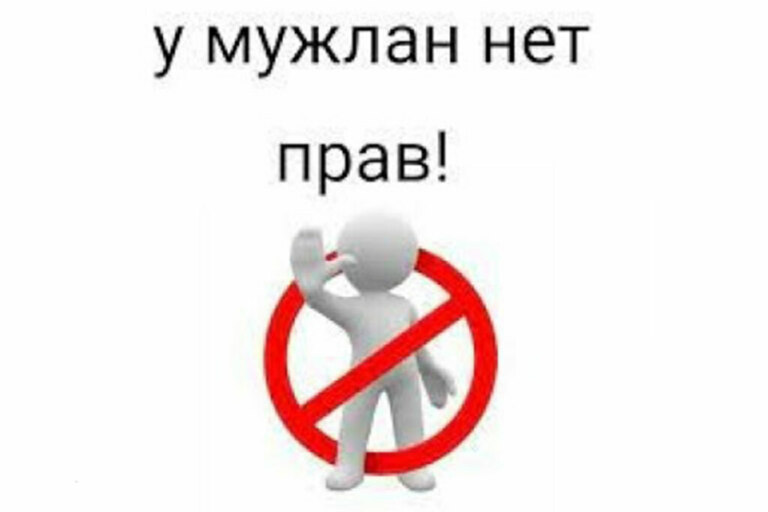
There's no child in the image: what's shown is a crossed-out little figure next to the text. The image functions as a slogan or a reaction, not as a documentary portrait of the audio's creator. The same statement doesn't reveal the views of all women and isn't a legal claim about rights. The tone is set by the music, the editing, and the caption.
Examples of playful reinterpretation
For a board-game group chat: "Those who forgot the rules have no right to deal the cards first." Laying the phrase over a stern scene turns a minor game rule into a universal law. Another option is a dance clip: "When your friends banned choosing the movie until you've heard everyone's suggestions." Here the strictness refers to a made-up situation.
For a group of friends, the formula can be softened: "Those who ate the last piece of cake have no right to act like they didn't notice." This is material for family teasing, not an accusation against a real person. The examples show how the phrase turns into a hyperbolic rule; they aren't connected to the unknown author of the original sound.
Consider the audience and the meaning of the words
This phrase works best in ironic musical clips and parodies of overly strict rules — where the contrast of a child's voice and a categorical ban already does all the work. If a post touches on real discrimination or violence, one joke alone may not be enough: it helps to clearly state what exactly is being condemned. In a friendly exchange, a short caption helps keep the playful tone from being mistaken for a serious generalization about men or women.
Don't publish the child's personal data, and don't attribute political views to them based on one phrase. If you use the audio clip, keep in mind the musical mix may be a later addition. The meme's mechanism rests on repetition and sharp tone, not on verifying anyone's actual civil rights.
In safe, everyday use, the phrase can become a self-deprecating line about something trivial: "Boors have no right to choose the show, if the cat has the remote." Another example is a friendly argument over the last slice of pizza, where everyone understands the "law" is a joke. Since the original sound is tied to a child, personal data about the minor shouldn't be sought or shared; the joke doesn't require deanonymizing anyone to be understood.