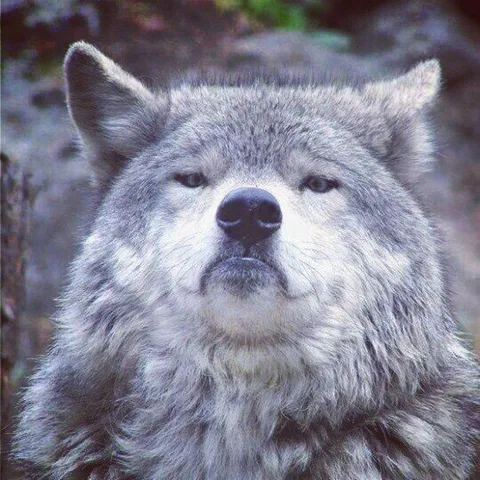
Two wolves against dark and light backgrounds
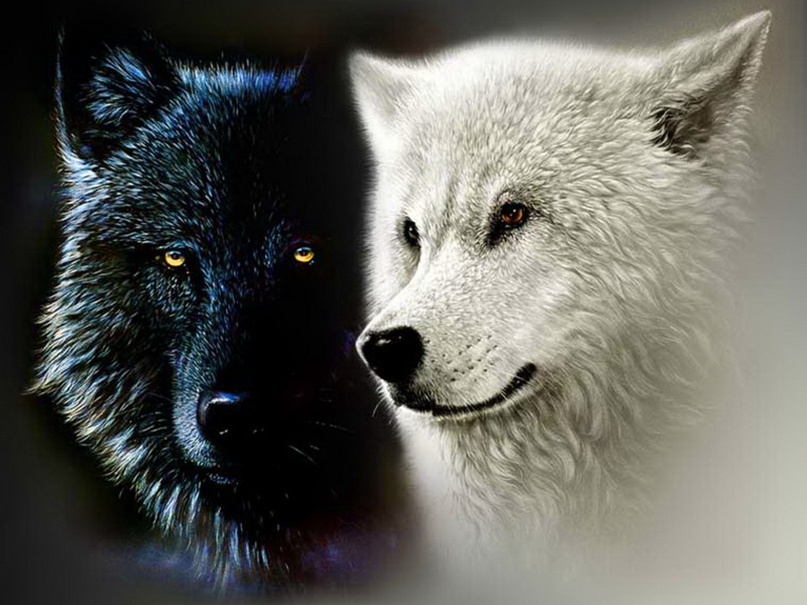
The picture shows two wolf portraits standing close together. On the left is a black wolf with a bluish sheen to its fur, its face almost dissolving into shadow while yellow eyes glow. On the right is a white wolf with thick light fur and one warm brown eye; its muzzle is turned toward the viewer, and the corner of its mouth looks like a faint smile. The boundary between them runs down the center.
The background is blurred, shifting from black to light gray, so the composition looks like a digital illustration or an edited photograph. The author of this image is not known. The contrast of light and shadow itself suggests the idea of opposition on which the parable relies.
The parable the joke is built on
The story of the two wolves belongs to the set of motivational texts. In it, the wolf of malice, envy and anger battles the wolf of love, peace and hope, and when asked which one wins, the answer is: the one you feed. It is attributed alternately to Native American traditions and to well-known preachers, but there is no reliable confirmation of these attributions, so the author remains unknown and the story circulates as folk wisdom.
The internet joke takes not the plot but the structure: two forces, one choice and a solemn ending. It is precisely this recognizable frame that is easy to substitute.
How the parable became a template
According to descriptions, the peak of the format with a swapped ending came in 2018. Who first posted such a version is not established: the earliest examples are cited only as early known ones, not as proven firsts.
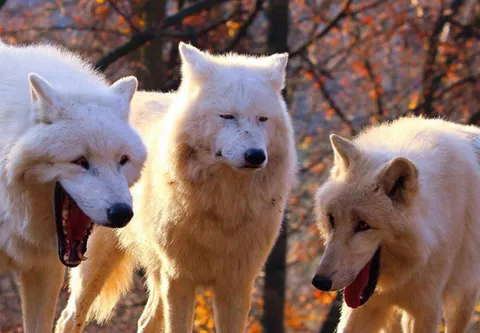
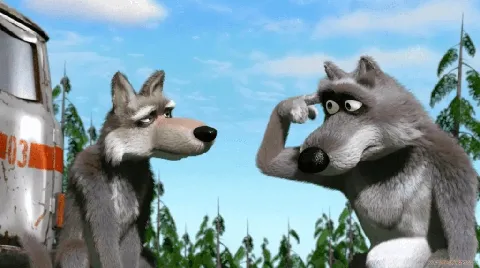
The format quickly took hold because it can be applied to any situation: you only need to come up with two items, and the picture itself sets the solemn tone. Later, versions appeared in which the wolves were replaced with other animals or objects.
Mechanics: a choice without a choice
The parable is built on a choice: which wolf to feed. The meme destroys this choice: both wolves get the same or nearly the same caption. When a serious moral question is promised at the start, and the options turn out identical, a pause arises, and instead of a conclusion the viewer gets an everyday truth. The more solemn the tone, the more noticeable the gap.
There is also the reverse scheme, where one wolf is described too concretely or absurdly. The general rule is one: the answer to the question "which wolf wins" settles nothing.
Caption examples
Four examples written independently.
"Inside me there are two wolves: one wants pizza, the other also wants pizza." Both options match, and the moral choice turns into a decision about what to have for dinner.
"Two wolves argue over who will make the tea. Both wait for the other one to boil the kettle." The meaning slides from the spiritual sphere into the domestic one, and the stillness of both sides becomes the joke.
"Inside a person there are two wolves: one is Monday morning, the other is also Monday morning." The repetition emphasizes that there is no conflict, only one and the same day.
"A wolf that is hungry and a wolf that is very hungry. No need to choose." The second wolf merely intensifies the first.
How to use the template
For a caption, it is better to take two lines close in meaning: the effect rests on the match. The picture of opposite wolves already defies expectations by itself, so the text should stress that the difference is only external.
Do not use the template to pin a label on a specific person or group of people. The joke works with an abstract choice, not with other people's personal qualities.