What's in the picture
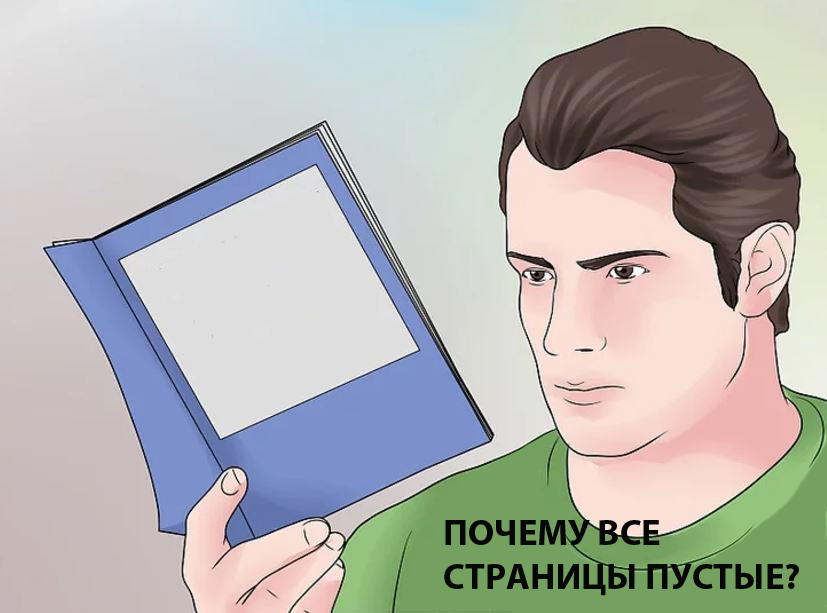
The illustration shows a man with dark, combed-back hair in a green t-shirt. He holds an open book with a blue cover in his hand and looks at it attentively, squinting slightly. His expression is focused and a little distrustful, like someone who has just discovered they've been deceived.
The book's pages are shown as a white rectangle with no text or drawings. At the bottom of the frame, large letters spell out the caption "WHY ARE ALL THE PAGES BLANK?" The contrast between the character's calm pose and the absurd question is the basis of the joke: the viewer sees that the book really is blank, yet the man still acts as though he's searching for an explanation.
Origin
The drawing is done in the soft, neat style of step-by-step illustrations commonly found in instructional and reference articles. The original image's author and the publication it was created for are unknown, so the picture's origin hasn't been established. Presumably it was taken from a stock or educational collection, though this can't be confirmed without the original source.
The Russian caption was added later and isn't part of the original drawing. Based on the meme's tags, it's dated to 2017, when the captioned picture began spreading through entertainment communities and messaging apps. The exact date of its first posting on the Russian internet is unknown, and the meme spread anonymously, with no credited author for the joke, so its history remains fragmentary.
How the meme is used
The typical use is irony about a situation where content was expected but isn't there. The caption is most often adapted to the specific case: why the fridge is empty, why there's zero on the paycheck card, why a report doesn't have a single figure in it, or why a TV series promised a continuation that never came.
Sometimes the meme is used in chats as a reply to a message that looks promising but turns out to be a letdown. There's also self-deprecating use: people joke this way about their own efforts that produced no result, or about long projects that, in the end, have nothing to show. The picture is short, so it's convenient to post in reply without a lengthy comment.
Why the meme works
The meme's main strength is the character's calm face. He looks as though he's genuinely searching for an explanation, and the viewer immediately understands the question is rhetorical: the answer is obvious, but the character either doesn't know it or doesn't want to admit it. It's precisely the character's seriousness against the backdrop of absurdity that turns an ordinary shot into a comic scene.
The image carries over easily to any situation: just change the caption, and the shot works. The minimalist scene, free of extra detail, lets the viewer fill in the context themselves, which matters a great deal for a simple meme. This is how the picture took root in different communities: it's used in jokes about school, in conversations about work, and in discussions of everyday disappointments.