What's shown
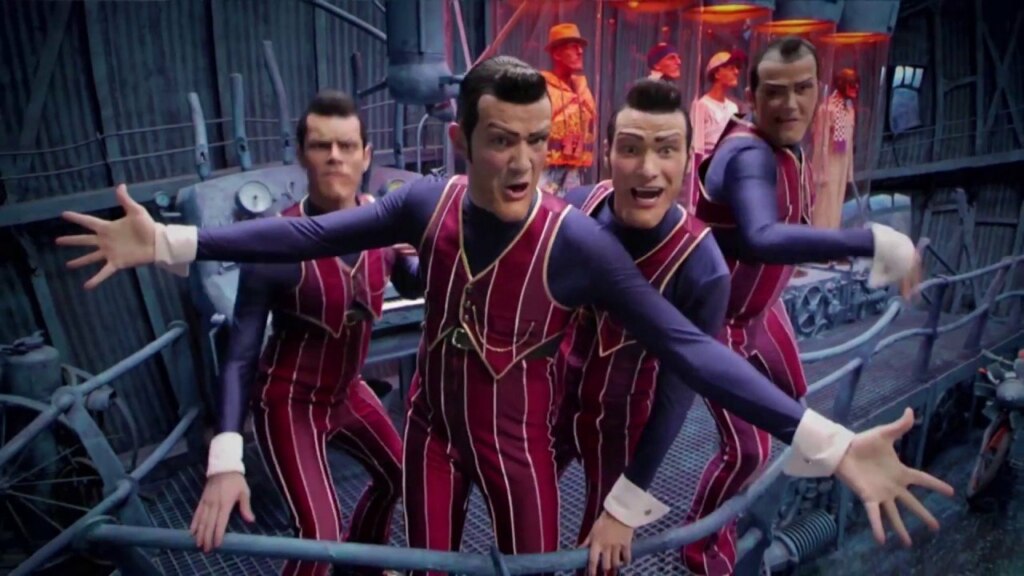
In the shot, four men in matching maroon pinstripe suits and purple turtlenecks stand on a metal platform against a backdrop of industrial structures. The central character spreads his arms wide and looks into the camera with a theatrical, triumphant expression, while the others echo his pose with slightly less flair.
The set resembles a villain's lair, and the characters' pose and expressions play on the idea of being "the number one team." The shot is easy to recognize even without sound: one glance at the gestures is enough to understand we're looking at overconfident triumph that's about to fall apart.
Origin
The song was written for the Icelandic children's show LazyTown, which has aired since 2004. The music is by Mani Svavarsson, performed by Stefan Karl Stefansson, who played Robbie Rotten. It was originally titled "Villain Number One." It appeared in the fourth season, in the episode "Robbie's Dream Team" (2014): Robbie tries to train a trio of clones to catch the superhero Sportacus, but their traps fail over and over.
The clip was posted on LazyTown's official channel in July 2015, but the real internet breakout came in September 2016. One of the first viral variants was a remix by the channel SiIvaGunner, which passed the song off as the soundtrack to the game Kirby Super Star Ultra. Numerous parodies followed, among which videos by the vlogger Grandayy stood out in particular. The "We Are Number One, but..." format became the dominant genre of late autumn 2016.
In October 2016, Stefan Karl Stefansson revealed his diagnosis: bile duct cancer. Fellow cast member Mark Valenti, the show's head writer, launched a fundraiser for his current expenses, and the campaign surpassed its $100,000 goal by December 20, 2016. Many parody creators directed their audience's attention specifically to that fundraiser, so the song became not just a meme but also a tool of support.
How it's used
The typical move is the formula "We Are Number One, but...": a genre or condition is tacked onto the song's title, and the melody plays out in an unexpected context. There are remixes in the style of horror games, classical music, and popular game soundtracks. The line from the chorus became a universal motto of self-assurance.
The meme was used to show off a victory, brag, or stage a comically misplaced celebration: instead of "we're the best," what plays is the anthem of villains who, in the show, constantly lose. This contrast is the basis of the joke, since a cocky anthem of losers sounds both funny and recognizable.
Musicians took it up too. In early 2017 the comedy punk band Radioactive Chicken Heads released a cover. That same year a petition with over 12,000 signatures appeared proposing to send Stefan Karl Stefansson to represent Iceland at Eurovision 2017. He himself never submitted an entry, focusing on his treatment instead.
Why the meme caught on
The song's main asset is its catchy rhythm and simple, easily repeated chorus. The lyrics consist of a handful of phrases that stick after a single listen, and anyone can sing along without rehearsal. Combined with the characters' theatrical gestures, this creates a recognizable image that's easy to drop into any video format.
The second reason is contrast. Loser villains bragging about victory and demanding recognition look comical, and viewers happily join the game. The irony was heightened by the fact that remixes often set the anthem over serious or wholly unexpected scenes, while in the show itself the song played out over failure after failure.
Finally, the meme became a kind of gesture of support. The widespread attention to the fundraiser showed that a joke can coexist with compassion. The image of Stefan Karl Stefansson, familiar to viewers from the show, became linked to the joy of the song, and that turned an internet meme into an example of how a community can help someone through a hard time.