What hobbyhorsing means
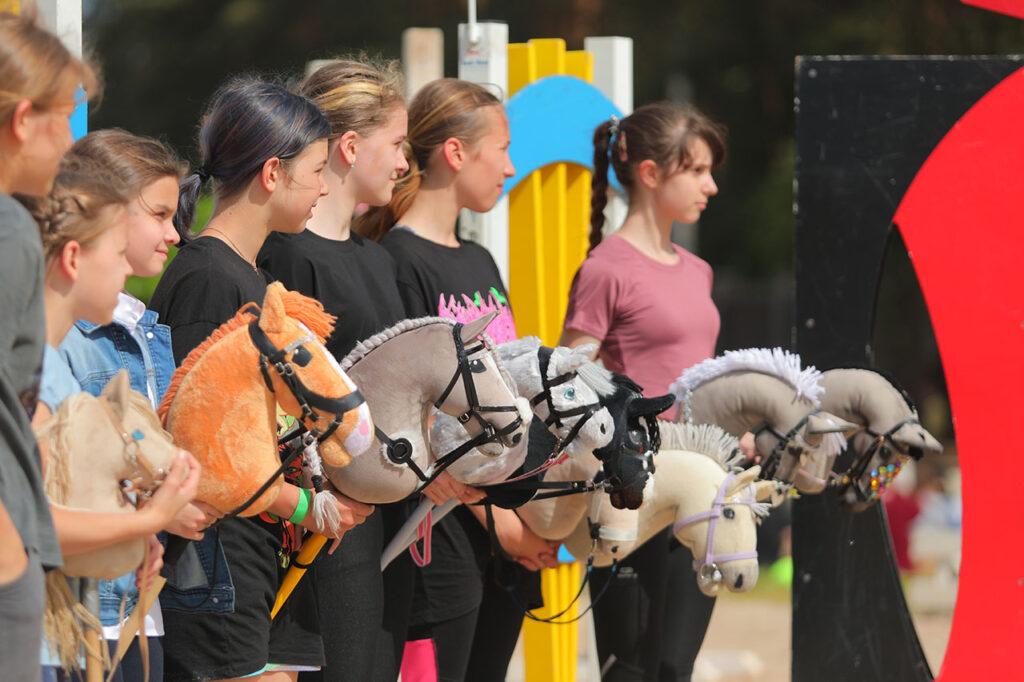
Hobbyhorsing is a physical activity with a toy horse on a stick that imitates certain elements of equestrian sport. Participants run with it, jump over obstacles, and practice courses and judged elements. Unlike actual horseback riding, there's no real animal involved, but it requires stamina, a sense of rhythm, movement control, and training. The format combines play, homemade equipment, and competition.
The practice developed in an especially organized way in Finland, where participants set up clubs, rules, and national competitions. Viral videos attracted a wider audience in the early 2020s, and the term was already noticeable on Russian-language social media in 2022–2024. There's no single author or video that "invented" the activity: it grew out of a community and amateur training.
How a performance is structured
A hobbyhorse is usually made from a soft head on a wooden or other lightweight stick; participants often sew it themselves, choosing the mane, bridle, and decorations. Competitions can include show-jumping courses with obstacles, dressage routines, and other tests. Judges assess not just clearing the obstacle, but also movement technique, body control, and the precision of the task performed.
To an observer, it might look like the athlete is simply holding a toy and running around. In reality, the movement requires synchronizing arms, legs, and torso, and the complex jumps create a strain comparable to gymnastic training. As in any sport, participants' skill levels vary: there are beginner sessions, casual creative meetups, and competitive performances. You can't judge someone's skill from a single amusing photo alone.
Why it became a meme
The virality relies on the mismatch between a serious sporting presentation and the unusual equipment. The camera might show a confident jump, and the viewer only then notices that there's a toy instead of a horse. That surprise triggers the joke and helps the clip spread. But repeated mocking videos often strip away the context and leave the impression that participants don't train at all and see the activity as a joke themselves.
For the participants themselves, it can be a sport, a craft, and part of a community all at once. Making the horse is a creative practice in its own right; training provides physical activity, and competitions give a reason to meet other people. Memes usually compress this many-sided activity into a single frame. So a good article should explain not just the viewer's reaction, but also how participants describe their own hobby.
What the image shows
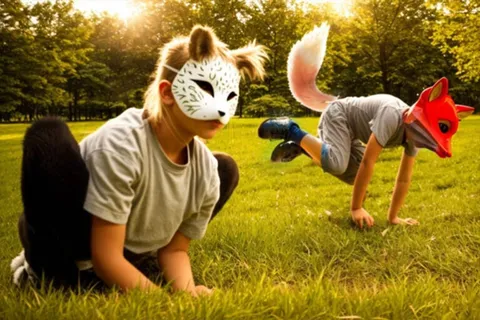
The image shows a staged scene with a person in an animal mask and a hobby horse in an open field, with an ordinary horse standing nearby. A single frame doesn't tell you whether anyone is actually competing or just filming a parody. The image mixes recognizable markers of the subculture with a deliberately fantastical detail, so it shouldn't be used as a reliable report on the activity.
If you're writing a caption, you can play on the gap between serious preparation and unusual props: "When you signed up for equestrian sport, but the horse only agreed to a photo shoot." It's important not to pass off a staged illustration as proof that all hobbyhorsers dress the same way or imagine themselves as real horses. The hobby isn't the same as the specific character in the picture.
The difference between hobbyhorsing and quadrobics
Hobbyhorsing is often confused with quadrobics or with role-play games, but they aren't the same thing. In the first case, the central object is a toy horse on a stick and an imitation of equestrian disciplines. In quadrobics, moving on all fours and movements inspired by animals are what matter. A participant may be into several of these directions at once, but the terms refer to different practices.
Also, you shouldn't automatically call anyone wearing a mask a "therian" or attribute beliefs to them based on a costume. Masks and tails can be part of cosplay, theatrical play, or a hobby. Precision matters here, because meme-based discussion often blends different groups together and builds a scary image out of them without grounds.
How to joke without dismissing participants
The template can be used for a gentle joke about your own childhood, homemade props, or an unexpected sport: "Planned to go for a run, but forgot that today is a hobbyhorsing competition." It's better to aim the humor at the contrast rather than at the participant's age or body. People come to the activity for different reasons, and an unfamiliar sport doesn't by itself mean it's not serious.