What's shown in the picture
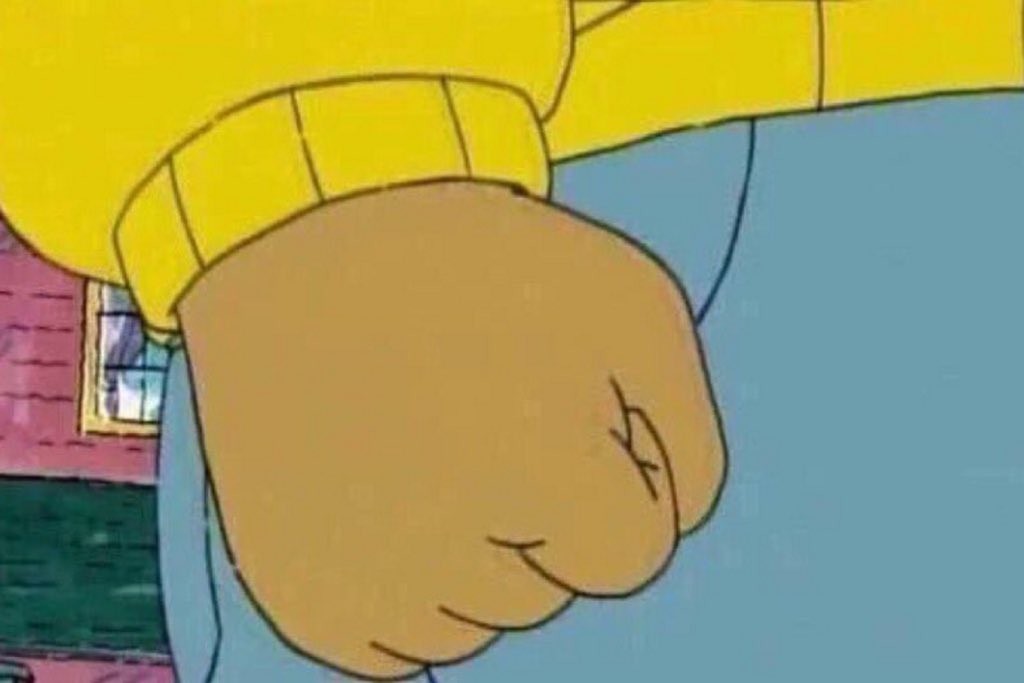
The frame shows a close-up of a cartoon character's arm in a yellow sweater: the fist is tightly clenched, the fingers pressed together, and the folds of the sleeve look pointedly voluminous. The background is muted, with a bit of blue clothing and a red-pink interior element visible, so attention stays squarely on the fist.
Such a tight close-up turns an ordinary gesture into a symbol. The fist looks tense, almost threatening, yet remains simple and recognizable, which is what let it become a self-contained sign of emotion with no need to caption the situation.
Origin
"Arthur" is an American animated series based on Marc Brown's children's books about a shy aardvark and his school friends. The show has aired since 1996 on PBS and has since become one of the best-known children's cartoons in the US. The show's hero regularly goes through everyday conflicts, so scenes with a clenched fist appeared fairly often.
The meme spread around 2016. The specific episode the frame is taken from, and the author of the first caption, are unknown, so the picture's exact origin can't be named. All that's known is that the meme grew out of the frame itself, not out of a separate phrase or internet campaign.
The picture itself circulated along with other clips from the series that users cut out and captioned. Importantly, the meme doesn't require knowing the plot: recognizing the characteristic gesture is enough to get the joke, so its fate depends on the image itself rather than on the character's backstory.
How the meme is used
Arthur's fist is most often used to depict restrained anger: when a person is trying with all their might not to snap, even though they're already boiling inside. Captions are usually phrased in first or third person and describe a situation where patience is running out. The meme suits replies to pushy people, pointless tasks, and endless approval chains.
Sometimes the frame is used self-deprecatingly, turning one's own irritation into a joke. The clenched fist becomes the visual punchline of a long message, and instead of a drawn-out account of the problem, one picture will do. That makes the meme handy in chats, where brevity and recognizability matter.
The frame also suits situations where you'd rather stay silent: instead of a lengthy reply to a contentious message, sending the clenched fist is enough. That makes the meme a convenient tool for exchanging emotions in work chats and comments, where direct harshness would be out of place.
Why the meme works
The frame's power lies in its sheer simplicity. A clenched fist reads instantly, with no translation and no need to know the show's context, so it's understood even by those who've never watched "Arthur." The emotion of anger is recognized in any language, which makes the meme convenient for international communication.
Another reason is the contrast between a children's cartoon and an adult emotion. A character viewers remember as soft and kind displays restrained fury, and that creates the comic effect. The joke lands all the funnier the more serious the gesture looks against the backdrop of harmless animation.