The animal
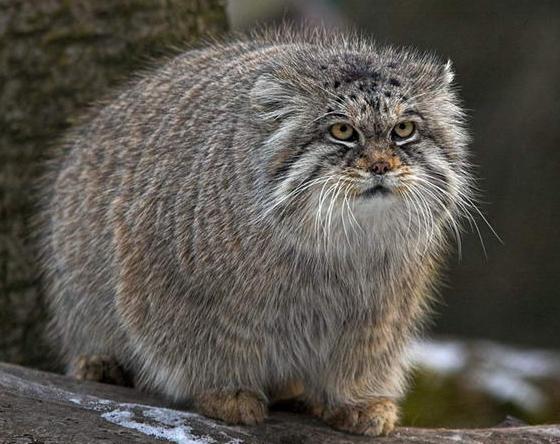
The manul is a small wild cat that lives in the steppes, semi-deserts, and mountain regions of Central Asia. The animal has thick, long fur, short legs, a broad head, and expressive amber eyes, which makes its appearance notably different from domestic cats. Manuls live secretive lives, hunt at dusk, and rarely come into view of people, which makes photographs of them especially prized among nature enthusiasts.
Because of its appearance, the animal often seems angry, puzzled, or displeased, though that impression comes mainly from its dense fur and the shape of its face. This feature became the basis for its internet image: a photo of a manul is perceived as the embodiment of a serious, slightly grumpy little face that instantly conveys a mood without any extra text or explanation.
Origin of the meme
Since 2008, the manul has been one of the beloved animals of the Russian-language internet. Photos spread across forums, blogs, and themed communities, and the phrase "pet the cat" itself became established as a call to simple, soothing relaxation and as gentle irony about everyday fuss. The author of the first caption and the original source of the photo are unknown.
The meme is tied to the Russian-speaking internet and dates to 2008. The exact dates of the first publications, as well as the circumstances behind the appearance of the phrase and the first photos, are not known.
How the meme is used
The phrase "pet the cat" usually appears under a photo of a manul as a gentle reminder to rest, calm down, or not react to irritating situations. Sometimes the caption comes across as self-irony: a person suggests to themselves or to someone else that they "pet the cat" instead of solving yet another problem, and the gesture is taken as a joking philosophy of everyday laziness.
The image is also used as a reaction to fatigue, work, studying, and everyday hassles. Since the animal's facial expression already conveys displeasure or skepticism, the captions are often short and need no explanation. This format is easily carried over into comments, captions on personal photos, and messages, wherever someone needs to quickly show their state of mind without a long text.
Cultural significance
The manul has become one of the popular animal heroes of the Russian-speaking internet, alongside other exotic and endearing pets. Its image is tied to an emotional reaction: the viewer recognizes the face and immediately understands the mood embedded in the caption. This effect makes the meme a convenient tool for communication, especially in communities that value gentle, unobtrusive humor.
The meme has retained its popularity thanks to its gentleness and clarity. It carries no aggression or complicated context, so it can be used in a wide range of communities, from animal-themed groups to general entertainment channels. Interest in manuls is also sustained by popular-science articles about rare wild cats, which introduce audiences to the biology and habitat of this animal.