The scene at the fence
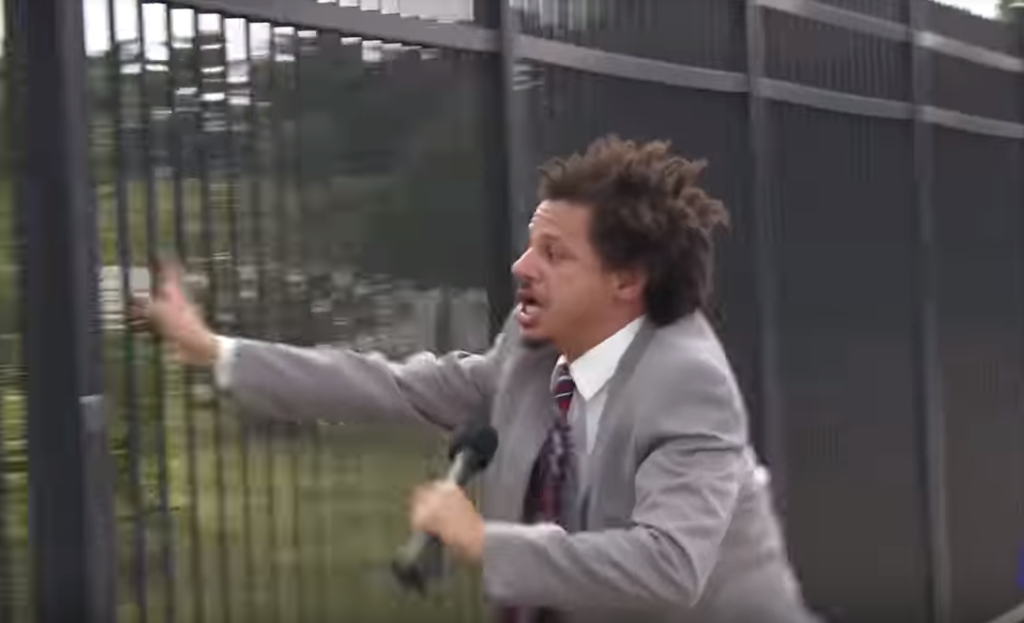
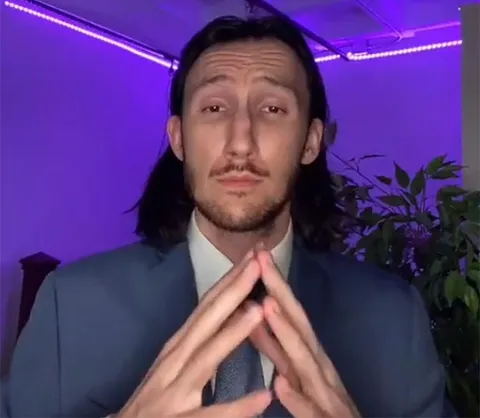
The frame shows a comedian in a gray suit, light shirt and striped tie. His hair is disheveled, his mouth is open, a microphone is in one hand, and the other is pushed through the bars of a tall dark fence. The background is smeared with motion: behind the fence a blurred lawn is visible. This is a moment from a video, not a staged portrait.
The emotion in the frame is urgency: the man clearly wants to get into a closed place and cannot. The frame itself does not explain why he is at the fence. For that you need the context of the show.
A show where everything is deliberately awkward
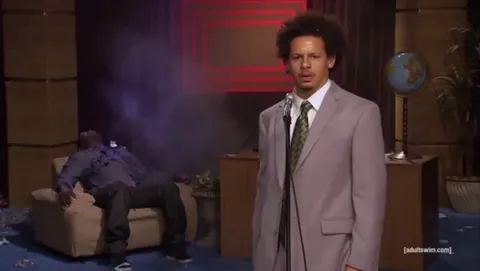
“The Eric Andre Show” airs on Adult Swim and is structured as a parody talk show. The host deliberately breaks the usual flow of an interview: he interrupts guests, wrecks the broadcast, and yells. The comedy relies on awkwardness and on the viewer never knowing what will happen next.
The scene that became a meme comes from the special episode “Near the DNC,” which aired on July 29, 2016. The episode was posted to YouTube the same day. The episode is tied to a party convention, and the figure in the frame is trying, without success, to pass through the fence.
The path of the clip
The scene became a meme two years after it aired. The earliest known use of the GIF dates to October 28, 2018: it was posted on Twitter with a joke about Dracula's castle. On November 3, 2018, a short excerpt with the shout appeared on YouTube, and within three months it had more than 366 thousand views.
In February 2019 the format spread across social networks and Reddit communities. It is usually posted as two panels: one shows a situation, the other shows Andre at the fence. This created the familiar scheme: you badly want something, and the entrance is closed.
Four captions for a plea to get in
The examples are made up for this frame.
“The ticket office closed a minute before I got there. Let me in!” The gap between a minor failure and a dramatic shout is what works here. The funnier the cause, the stronger the contrast with the pose.
“My streaming subscription expired before I could finish the finale. Let me in!” The phrase fits everyday impatience: a person wants access to a familiar pleasure.
“It's Friday, six in the evening, and the report is still hanging over me at the office. Let me into my home!” A closed door stands for the end of the workday, and the shout comes out almost theatrical.
“The intercom is silent, and my key is stuck inside. Let me in!” The caption gathers several small failures, and the final shout makes them a comic conclusion. All four versions rely on the same device: a small cause and a big voice.
How not to turn the template into mockery
The template is good for self-irony and everyday situations. It should not be applied to real people in difficult circumstances: the sick, refugees, or those who are truly being kept out because of their origin or condition. Then a funny plea turns into a jeer.
It is best to crop the frame so that the hand on the fence and the face are visible. That way the gesture reads at once, and the caption can be kept short.