Why Article 13 was debated
In the summer of 2018, users discussed a draft European directive on copyright in the digital market. Particular attention went to Article 13, which concerned platforms’ liability for uploaded works. Opponents feared that, to meet the requirements, services would apply automatic checks and block parodies, remixes, and memes along with copies of works. The complicated dispute over liability received a short, emotional label: “meme ban.”
In July, the European Parliament rejected the mandate to begin negotiations on the version then on the table, returning the question to discussion in September. This did not mark the final conclusion of the reform. The directive was adopted in 2019, and the provision under discussion received the number 17. The final text separately provides exceptions for quotation, criticism, reviews, caricature, parody, and pastiche. Therefore the meme’s story belongs to the fear of the project’s possible consequences; the headline formula is not a literal name for a general ban on all funny pictures.
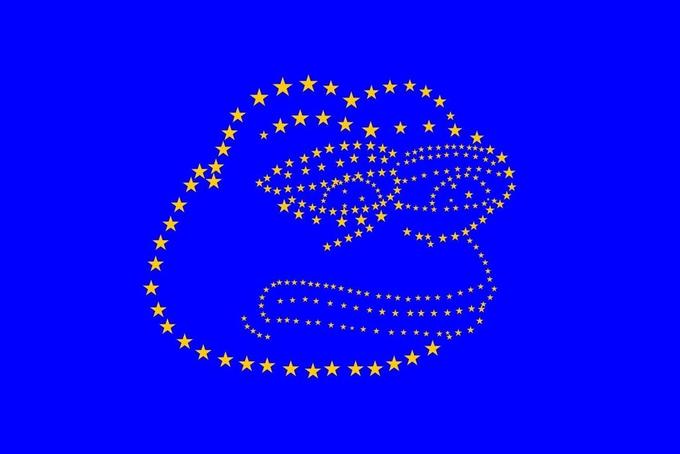
European stars become Pepe
The image has a bright blue background and many golden five-pointed stars. They form the head of Pepe the Frog: a rounded outline, eyes, the bridge of the nose, and a closed mouth. There are no captions, dates, or article number here. Instead of the usual circle of twelve stars, far more elements are used, out of which the familiar meme portrait is assembled.
The colors bring the European flag to mind instantly, while the configuration makes you see an internet character. This is a visual fusion of two topics that seemed opposed in the news: official regulation and the free exchange of pictures. The image itself is already a remake, so it not only tells about the dispute but also demonstrates the cultural practice its participants were worried about.
An alarming news item as a meme plot
Jokes about the reform often portrayed memes as a disappearing resource. Users imagined secretly hoarding pictures, saying goodbye to favorite reactions, or crossing a border to get access to them. The comedy was built on an excessively literal reading of an alarming formula: a familiar way of talking suddenly turned into a forbidden object with its own dramatic fate.
The difference between the 2018 draft and the final 2019 directive is easy to see through this drawing. Pepe does not explain the legal conditions for using a work; he expresses the mood of the discussion. The stars give him institutional scale, while the recognizable face returns the topic to everyday communication. A small reaction from a chat becomes a symbol of what participants feared losing in a large political decision.
Three invented scenes of meme scarcity
An invented example: a character packs pictures into a box labeled “Winter Supplies.” A digital habit turns into household provisions. In another storyline, a chat holds a solemn send-off for an old meme, even though participants had just forwarded it to each other ten more times. The mismatch between the farewell and the image’s ongoing life creates the joke.
The third variant is a packing list where, instead of clothes, there are reactions to fatigue, surprise, and Monday. The hero seems to be relocating together with his whole stock of internet emotions. These situations are invented and reflect the language of 2018 anxiety, not the actual order in which the law applies. Like the star portrait, they turn an abstract discussion of platforms and rights into a recognizable story about the pictures people are used to talking with.