The frame: a woman at the rostrum
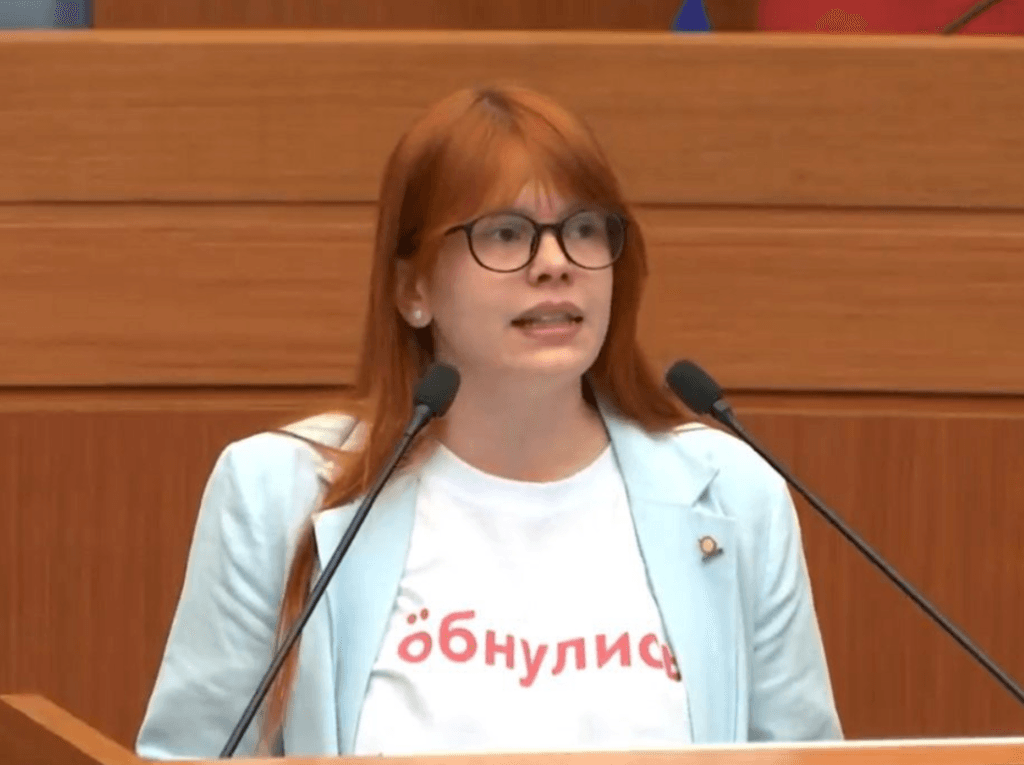
The image shows a girl with red hair and round glasses standing behind a podium with two microphones. She wears a light blue jacket and a white T-shirt with the red inscription “Öбнулись”. Note the two dots above the “О”: they are what turn the neutral “обнулись” (“were reset”) into an ambiguous phrase. A small badge is visible near the collar of the jacket.
This is not a template for captions but a frame from a broadcast of a real political speech, and it is precisely this that became the illustration for the meme. The woman in the frame is a public figure, a Moscow City Duma deputy from the Yabloko faction, Daria Besedina. She was elected in 2019 with the support of “Smart Voting”.
What “Obnulenie” Means
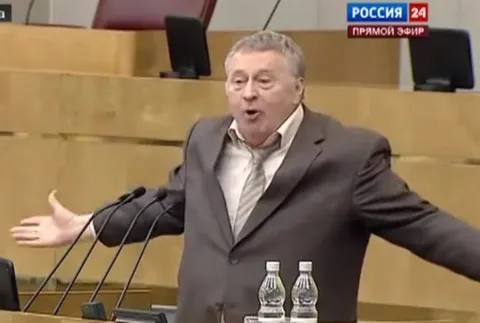
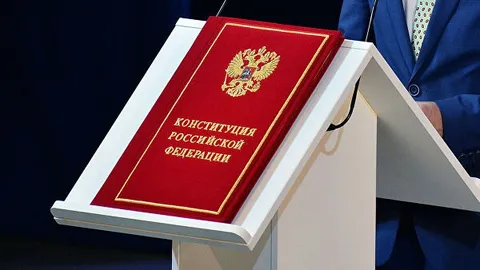
On March 10, 2020, during the State Duma’s consideration of amendments to the Constitution, a proposal was voiced under which the number of Vladimir Putin’s presidential terms would be counted anew. This is how the word “obnulenie” (“resetting to zero”) appeared, and it quickly became a synonym for the whole story. The amendments were then passed on to regional parliaments, and the nationwide vote was moved to the summer because of the pandemic; it concluded on July 1, 2020.
On March 12, 2020, the amendments were also discussed in the Moscow City Duma. Besedina had submitted in advance some fifty tongue-in-cheek amendments: among them, for example, awarding the president the title “Your Excellency, Life-Long President” and a new definition of the family as a “sacred union of a man, a woman and V. V. Putin.” She was deprived of the right to speak, but she still walked up to the microphone in the T-shirt with the inscription.
How the wordplay works
The secret of the meme lies in a visual substitution. The two dots above the “О” make the letter look like “Ё”, and the word starts to read quite differently from how it is written. It is an illusion resembling a typo, but bold enough that it never has to be spoken aloud. The reader supplies the crude meaning himself, while the author formally stays within the bounds of decency.
The deputy’s colleagues reacted harshly: some of them accused Besedina of offending the feelings of believers and demanded that she give up her mandate. The joke was further fuelled by the fact that the T-shirt was immediately sold as merchandise, so the word became at once a protest phrase and a product. This is the typical fate of a meme: from a political gesture to an everyday consumer item.
Invented captions
The examples were invented for this article. Under a news story about price increases: “Everyone who believed the price rise was temporary: Öбнулись”. This uses the double meaning: the price has supposedly “reset”, but in the opposite direction.
In a work chat, after yet another postponed submission date: “Deadline: Öбнулись”, a joke about deadlines that start counting down again. A third variant is about sports: “My personal record in squats after a month without training: Öбнулись”. Any example works where a counter suddenly returns to zero and you are not ready for it.
How to treat the meme
The meme is inseparable from the political context of 2020, and it is worth remembering that: some see it as sharp satire, others as an insult. If you use it in neutral everyday jokes, it is better to explain right away what exactly “was reset”, so that the ambiguity is not read as a political statement.
Do not attribute to the depicted deputy other people’s words or actions: jokes should concern the phrase itself and the events around it.