Grain, subtitles and slow tempo
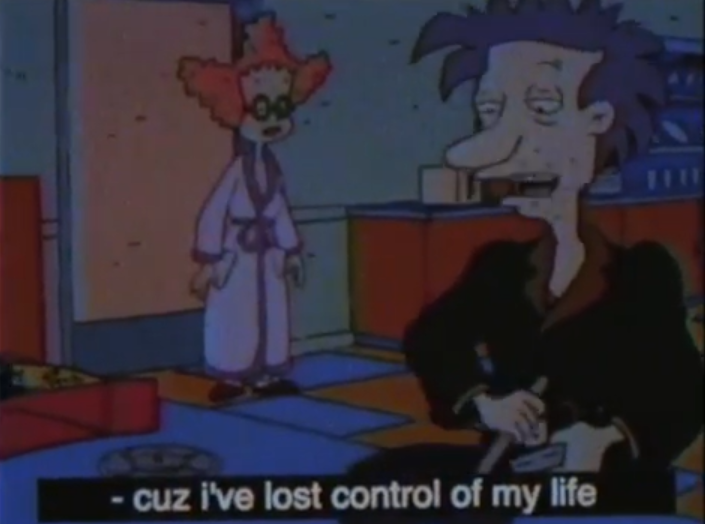
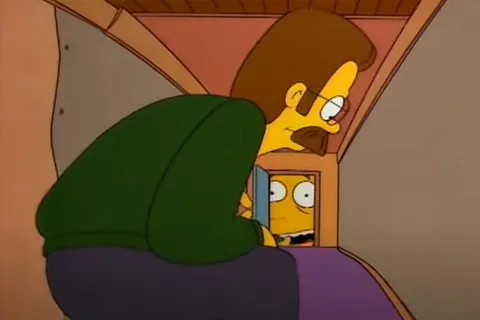
The frame looks like old film from a videotape: the colors are smeared, the edges are blurred, the image is grainy. The contrast with the cartoon graphics is noticeable at once, as if the drawn characters had been overwritten many times.
At the bottom, white letters show the subtitle “cuz i've lost control of my life.” On the right, in the foreground, is a man with tousled dark blue hair in a dark jacket; he smiles with a tired look and holds something in his hand. On the left, in the background, stands a woman in a light robe with red curls and glasses. Judging by appearance, these are Stu and Didi Pickles from Rugrats.
The original cartoon
The phrase is taken from the animated series Rugrats (known in Russian release as “Okh uzh eti detki”). According to reports, in the scene Stu cannot sleep at night and explains to his wife what he is doing, with a line that later became the basis of the remixes. The episode title and air date are unknown.
It is worth separating two layers: the original scene, written as comedic, and the later clips in the style of “sad cartoons.” In the second layer, the same fragment is presented with slow music and subtitles that shift the tone to intimate sadness. The exact time the trend emerged and the platform on which it gained strength have not been established.
Why sadness is funny
The mechanics rest on the mismatch between genre and content. A children’s cartoon is associated with brightness and lightness, while the music and slow editing turn it into a chamber drama. The viewer laughs not at the character but at how seriously a domestic situation is presented: a nighttime commotion in the kitchen looks like a crisis.
The subtitle adds confessional weight. A line about losing control sounds too solemn for the occasion, and this gap between the text and the situation makes the remix recognizable even without the music.
Captions that repeat the technique
Below are three invented examples. All of them work by the same scheme: a short everyday scene receives an overly heavy caption.
“Went out for bread and came back with a conclusion about life.” An ordinary trip becomes a turning point. It is funny that the journey is short and the conclusion is enormous.
“Promised myself I’d go to bed at ten. It’s now half past two, and this is already a lifestyle.” The phrasing sounds like a diagnosis, though the subject is a sleep schedule. The gap between the scale of the words and the triviality of the occasion produces the effect.
“Answered ‘fine’ to a question about the project.” A short phrase presented as the outcome of an entire drama works through a dry intonation: the viewer fills in the subtext on their own.
In all three cases, a dramatic phrasing accompanies a trifle, and the reader puts the two together. If the caption sounds more solemn than the situation, the scene becomes funny.
Where the line of the joke lies
The aesthetic of “sad cartoons” easily slides from irony into genuine melancholy, and part of the audience takes such clips seriously. For this reason, it is wiser to choose light everyday triggers for the template, such as lack of sleep, a forgotten password or postponed tasks.
Captions about serious conditions or other people’s misfortunes are better avoided: the joke then stops being about the style and starts to look like mockery. The simple rule here is: dramatic tone, minor cause.